![vmexsa logo [front]](https://vmex.co.za/wp-content/uploads/2023/06/cropped-cropped-cropped-front-1-scaled.webp)
Deputy Minister for Employment and Labour, Judith Nemadzinga-Tshabalala, emphasised the importance of promoting healthy and safe workplaces during the 2026 World Day for Health and Safety at Work.
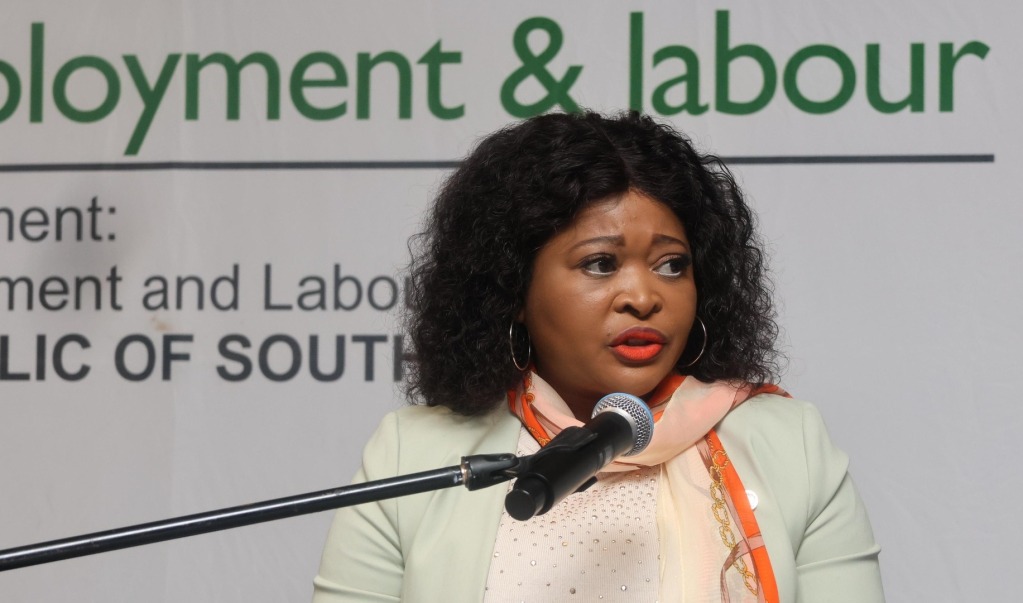
She stressed that the issue extends beyond public spaces, affecting factories, farms, offices, and construction sites, where it is crucial for workers to assert their rights.
The deputy minister stated that dangerous working conditions betray the freedoms celebrated in South Africa, pointing out the contradiction of exploitative labor practices against the ideals of the liberation struggle.
The event, held on Friday at Emnotweni Arena in Mbombela, focused on the theme “Let’s Ensure a Healthy Psychosocial Working Environment.”
This theme emerged in response to concerning data from the International Labour Organization, which reports that there are approximately 840,000 deaths each year attributed to psychosocial risks in the workplace.
The event aimed to raise awareness and promote strategies to create safer and healthier work environments that address these significant risks.
Workplace stability
Nemadzinga-Tshabalala noted the importance of social dialogue among government, organized business, and labor organizations, stressing that addressing systemic issues such as poverty, unemployment, and inequality requires collaborative efforts.
She called on employers to ensure fair wages and decent working conditions, while trade unions should uphold workers’ rights and promote workplace stability.
Highlighting the significance of psychosocial safety, she argued that workplace health encompasses both physical and psychological dimensions.
The deputy minister pointed out that stress and exploitation hinder productivity and contribute to broader socio-economic instability.
She also criticized the exploitative employment of undocumented migrants that undermines labor protections and erodes worker solidarity.
ALSO READ | Minimum wage set to increase to R30.23 per hour
To tackle these issues, Nemadzinga-Tshabalala advocated for a robust state capacity to monitor and intervene in high-risk workplaces and emphasized the integration of soft skills in the training of new inspectors.
Addressing psychosocial risks is framed not merely as a moral duty but as a legal and social necessity, with failure to act leading to mental health issues and decreased productivity.
Simphiwe Mabhele from the ILO echoed these sentiments, highlighting the need for enhanced research to understand psychosocial hazards and indicating that employers are increasingly facing challenges like absenteeism and reduced productivity due to these emerging workplace issues.