![vmexsa logo [front]](https://vmex.co.za/wp-content/uploads/2023/06/cropped-cropped-cropped-front-1-scaled.webp)

A suspected poacher was arrested for attempted white rhino poaching incident which left park manager injured at Hluhluwe-Imfolozi Park, KwaZulu-Natal.
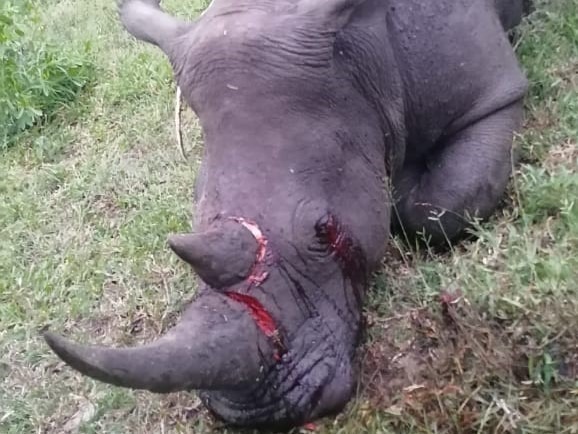
HiP Park Manager, Amos Khetha Tembe, was hospitalised after sustaining injuries while effecting an arrest.
According to Environmental Affairs MEC Siboniso Duma, cutting edge technology and game rangers alertness are the reason they stopped poachers from removing the horn of a rhino.
“Despite being under threat due to poaching, this protected species continue to contribute towards the growth of eco-tourism not only in KZN but in South Africa and the whole continent.
“As it is known, most of the white rhinos can trace their origin to Hluhluwe-Imfolozi Game Park. It is for these reasons this HiP is known as the birthplace of place of rhino.
More resources to curb rhino poaching
“We have agreed with the newly appointed CEO Sihle Mkhize that more resources must be deployed to strengthen the work of Game Rangers,” he stated.
Duma added that game rangers are unsung heroes and heroines who often risk their personal lives in the service of the nation.
He added; “We have agreed with the new CEO that one of his main responsibilities is to boost their morale and ensure that their working conditions are improved.
“We will continue to support the work of Ezemvelo Board as chaired by Lydia Johnson.
“They continue to work with traditional leaders and communities to ensure that they benefit from eco-tourism products and conservation services.”
ALSO READ | ‘Stay away from the sun, keep hydrated’: Residents encouraged
Duma further said the long-term plan is to use the portion of the revenue generated through conservation services to implement viable projects based on the needs of local communities.
“Finally, we continue to receive reports of an increase in the number of tourists to more than 114 protected areas and close to 40 accommodation facilities managed by Ezemvelo.
“Broadly speaking, we expect more than 845 000 visitors to KZN and 52 000 will be international tourists.
“Tourism as a sector is projected to contribute R3,6 billion to the provincial economy,” he concluded.