![vmexsa logo [front]](https://vmex.co.za/wp-content/uploads/2023/06/cropped-cropped-cropped-front-1-scaled.webp)
Post-school training programs can provide valuable skills for future careers.

Science, Technology and Innovation (DSTI), minister Blade Nzimande, Nzimande made the call as he joined the nation in celebrating the hard work and achievements of the Grade 12 Class of 2024.
Post-school training is essential for equipping learners with the necessary skills to succeed in a competitive job market.
Adding that they should consider taking advantage of a second chance to improve their results.
“As minister responsible for the development and promotion of science, technology, and innovation in South Africa, I fully share the concerns of the minister of basic education that our learners in Grades 5 to 9 significantly underperform in relation to their global counterparts in mathematics and science,” the minister said in a statement.
Furthermore, engaging in post-school training can greatly enhance one’s employability and career prospects. Post-school training initiatives help bridge the gap between education and the workforce.
Nzimande noted a decline in enrolments in critical subjects, such as physical sciences, mathematics, accounting, and economics, according to data.
These subjects are essential for a nation’s progress in science, innovation, and economic development.
In the next five years, Nzimande said the department of science, technology and innovation will actively support government efforts to enhance the performance of the schooling system in science and mathematics subjects.
The minister believes that the nation requires massive and sustained growth in the production of science, technology, engineering, and mathematics (STEM) graduates, if South Africa is to forge a technology-led future.
Exploring Post-School Training Options
“It is for this reason that we, as the DSTI have adopted the mantra, which says: Placing science, technology, and innovation at the centre of government, education, industry and society,” Nzimande said.
As part of the department’s contribution to addressing the maths and science-related challenges in the basic education sector, Nzimande said the department will seek to strengthen its existing cooperation with the department of basic education, which is supported by cooperation agreements with the nine provincial departments of education.
In addition, the department has vowed to also strengthen existing cooperation with the department of higher education, which is the main department in respect of higher education skills development, which includes science skills development.
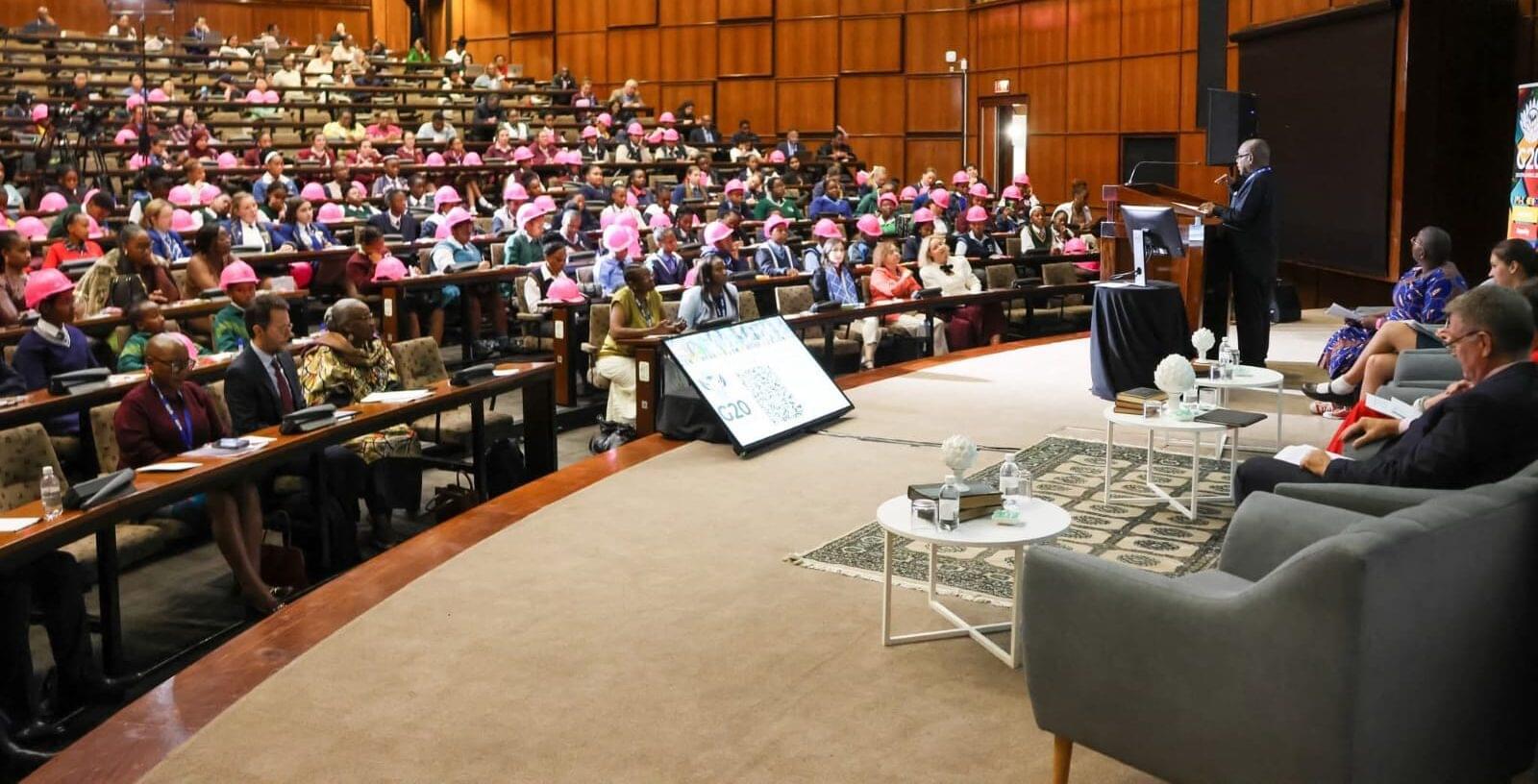
“We are currently implementing several extra-curricular and non-formal activities in the basic education sector, whose main objective is to excite learners about maths and science and contribute towards improved learner performance in maths and science.
Therefore, it is crucial to advocate for more accessible post-school training programs for all learners.
By participating in post-school training, students can gain hands-on experience in their chosen fields.
“These activities include the flagship science engagement program known as National Science Week (NSW), career guidance, and the distribution of Science, Engineering, and Technology (SET) career materials at various events, communities, and schools,” Nzimande said.
Ultimately, investing in post-school training is key to fostering innovation and growth in our economy.
In conclusion, the importance of post-school training cannot be overstated, as it shapes the future of our youth.
He added that the department believes that the Mathematics Olympiads are extremely important, as they help develop the problem-solving skills of learners.
ALSO READ | Education Minister Gwarube to announce 2024 matric results
In 2023, more than 77 000 learners participated in the South African Mathematics Olympiad (SAMO), a science engagement activity that focuses on high school learners.
In 2024, more than 84 000 primary school learners participated in the South African Mathematics Challenge.
“We believe that all our science awareness and engagement interventions are not just critical for enhancing learner performance in maths and science, but also to enable our strategic goal of placing science, technology, and innovation at the centre of government, education, industry, and society.”
Article sourced: SAgovNews